
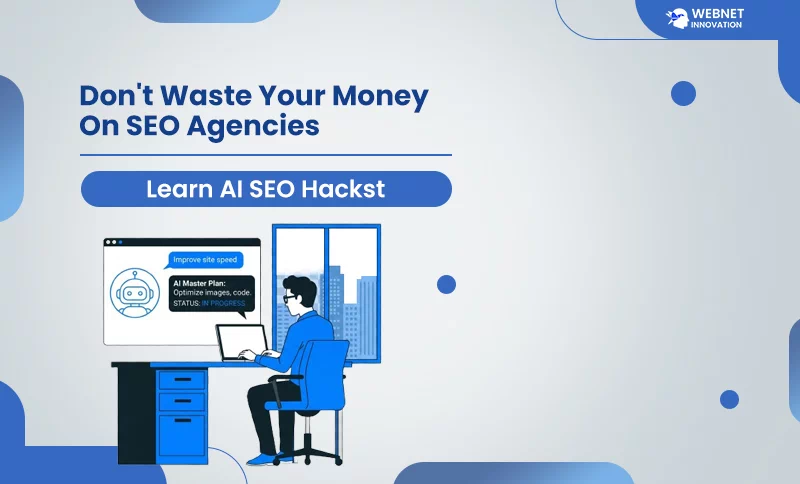
If you are running a website and spending thousands of dollars every month on an SEO agency, I completely understand your frustration when results are slow. The good news is that AI SEO hacks have changed the entire game. Today, you do not need a big budget or a team of SEO experts to rank your website on Google. With the best AI tools and a smart plan, you can do it yourself — faster, smarter, and without burning a hole in your pocket.
This is not just theory. This is a step-by-step guide that will show you exactly how to train AI, analyze your data, review your website content, and follow a master plan to get real Google rankings.
Table of Contents
Why Most Website Owners Waste Money on SEO Agencies?
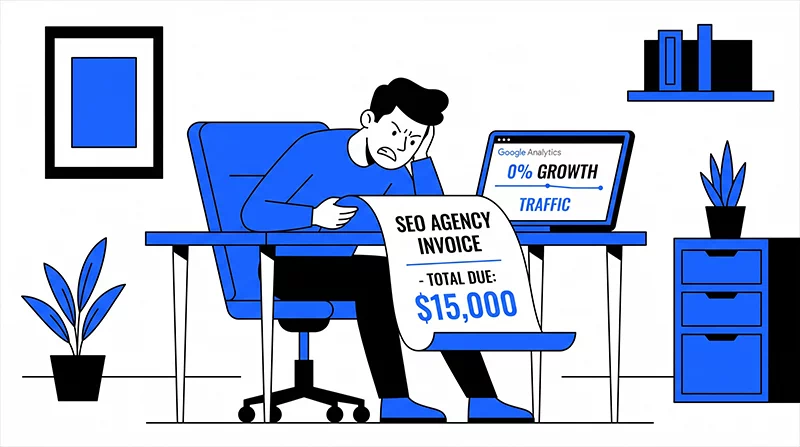
Let’s be honest for a second. Most SEO agencies charge you anywhere between $500 to $5,000 per month. You wait for three to six months, and sometimes the results are barely noticeable. The reason is simple — many agencies follow a copy-paste SEO strategy. They use the same keyword research sheet, the same content template, and the same backlink tricks for every client. Your website is unique, your audience is different, and a one-size-fits-all plan will never work the best for you.
Think about it like this. Imagine you go to a tailor and ask for a custom suit, but they hand you the same suit they gave to the last 10 customers. That is exactly what many SEO agencies do. They are not wrong to use tools and processes — but the lack of personalization is where your money goes to waste.
You are not helpless here. AI tools today are so powerful that they can do what a team of SEO analysts does — but in minutes, not months. And the best part? You are in full control.
The Real Power of AI SEO Hacks: Why This Changes Everything

We should first understand what AI actually means for SEO. Most people associate ‘AI for SEO’ only with writing blog posts through ChatGPT. To tell the truth, this is a very small part of the whole story. These AI SEO hacks go way beyond content writing. For example, if you give your Google Search Console data to AI, it can analyse it and detect patterns you might not have noticed even if you looked at it manually. In addition, it can also scan your website URL, check your content against the best-ranking pages, discover missing keywords, identify weak meta titles, broken content structures, and even give you exact directions on what to fix.
Let me give you a basic illustration. Assume your website marketing WordPress themes. You prepared an article on ‘best WordPress themes for small businesses’ but you skipped a tiny step in your content; you have not included terms such as ‘lightweight WordPress themes’ or ‘fast-loading WordPress templates.’ Even an SEO expert might overlook this point. But an AI program will analyze the top 10 pages ranking for that keyword and in no time, it will tell you all the missing terms. This is exactly what AI in SEO is speed, accuracy, and personalization.
What are AI SEO hacks?
1. Train Any AI Tool to Give You Smarter SEO Results

This is a silly mistake where most people go wrong. Every time they open ChatGPT or any AI tool and simply ask, “Write me an SEO blog post.” The output they get is generic, robotic, and will never rank. Train your AI before you ask it anything; it is a secret of AI tools. AI is just like a new team member in your agency or team. If you do not explain the task properly, they will guess what you want and deliver average work.
How to Set Up AI with the Right Instructions?
Here is how to set up your AI with the right instructions before you start any SEO task:
These are instructions to give your AI at the start of every session:
- Tell it your niche and audience: Example — “I run a WordPress development blog. My audience is small business owners and beginner web developers.”
- Share your target keyword: Example — “My primary keyword is ‘best WordPress speed optimization plugin.’ My secondary keyword is ‘how to speed up WordPress website.'”
- Set the content tone: Example — “Write in a simple, human tone. Avoid technical jargon. Explain everything with real-world examples.”
- Define the content goal: Example — “The goal is to rank on Google Page 1. Optimize for search intent. Include FAQs and proper H2/H3 structure.”
- Set competitor context: Example — “Analyze the top 3 ranking pages for this keyword and tell me what topics they cover that I should include.”
When you explained AI on this level of briefing, the AI stops acting like a generic writing machine and starts acting like your personal SEO strategist. The output quality jumps dramatically and you get content that is actually built to rank.
2. Download Google Search Console Data and Let AI Build Your Master Plan
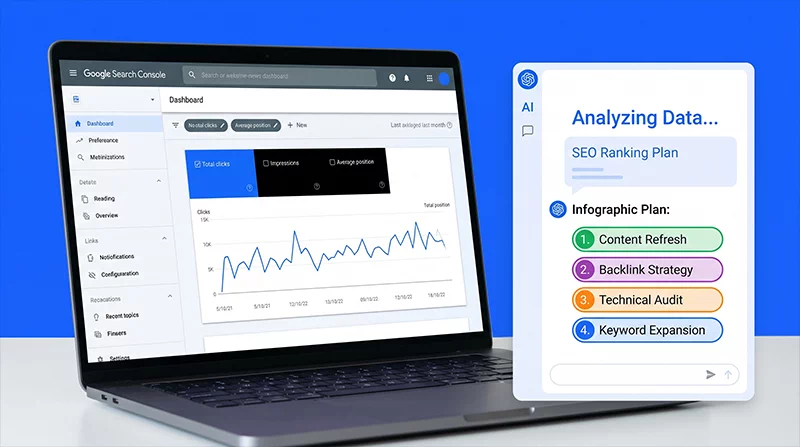
This is one of the most underrated AI SEO hacks that can completely transform how you approach your website rankings. Google Search Console provides you actual data on how your site is performing, what queries people are entering to discover you, which pages are visible but rarely clicked, and where your positions are stagnant. It helps to improve your website ranking using GSC without hiring an SEO agency. A majority of website owners look at this data but simply neglect to make a proper use of it. However, with the help of AI, you can convert such raw data into a fully optimized action plan.
Here is the exact process to follow:
- Log into Google Search Console and go to the Performance section.
- Set the date range to the last 28 days — this gives you fresh and relevant data.
- Export the data as a CSV file — you will get columns like queries, pages, impressions, clicks, CTR, and average position.
- Open your AI tool (ChatGPT, Claude, or Gemini) and upload the CSV file.
- Give the AI this instruction: “Here is my Google Search Console data for the last 28 days. Please analyze it and do the following: Find keywords where my average position is between 8 and 20 — these are my quick-win opportunities. Find pages with high impressions but low CTR and suggest better meta titles and descriptions. Identify any keywords that are losing ranking position and suggest why. Build me a 30-day SEO action plan based on this data.”
What happens next is quite remarkable. The AI examines each row of your data and then returns to you with a ranked set of activities. It points out the web pages you should correct first, the keywords you need to focus on right away, and the meta titles that are lowering your click-through rate. This type of analysis is something that an SEO agency would require several days to produce.
What AI will find in your meta titles and descriptions:
- Titles that are too long or too short for Google’s display limit
- Missing primary keywords in the title tag
- Descriptions that do not have a clear call-to-action
- Pages where the title and description do not match the search intent
- Duplicate meta descriptions across multiple pages
3. Let AI Analyze Your Website URL and Fix Content Mistakes
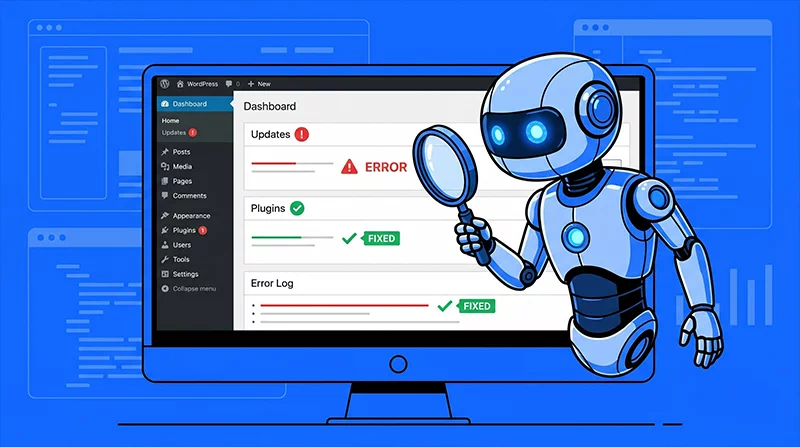
Beyond Search Console data, AI can directly review your live website pages and help you improve them. This step is about giving AI your URL and asking it to compare your content against what is already ranking on Google. You are essentially asking AI to be your content auditor.
Here is how to do it step by step:
- Share your website’s page URL with the AI and paste it in the chat field: “Visit this URL and review the content for SEO. Check if the primary keyword is in the title, first paragraph, at least two subheadings, and the meta description.”
- Ask for a competitor comparison: “Search the top 3 ranking pages for [your keyword] and tell me what topics, subtopics, and keywords they cover that my page is missing.”
- Request a content gap report: The AI will list all the missing sections, related questions, LSI keywords, and FAQs that your content needs to rank better.
- Fix readability issues: Ask AI — “Is my content easy to read for a beginner? Are there any paragraphs that are too technical or too long?”
- Check internal linking: “Suggest 5 internal links I can add to this page from other pages on my website to improve SEO.”
This process will help to turns your existing content from average to competitive without starting from scratch. Think of it as renovating your house instead of building a new one, much faster, much cheaper, and just as effective.
4. Follow the AI Master Plan and Watch Your Website Rank on Google
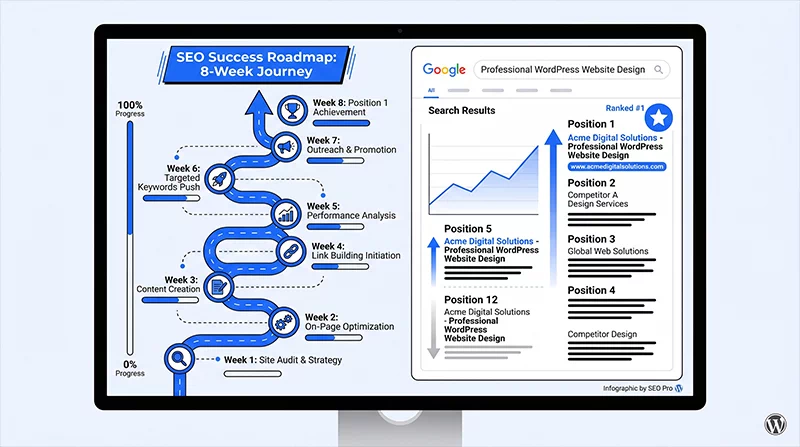
Once you have trained your AI, analyzed your Search Console data, and fixed your website content, the final step is execution. AI will give you a master plan — but a plan only works if you follow it consistently. Here is where most people fall short when AI generates a master plan after deep analysis of the data, some people only review the plan and don’t execute it. They stare at the AI-generated plan, get excited about the results, and then do nothing about the recommendations.
Here is a realistic 30-day execution framework based on what AI will typically suggest:
Week 1 — Quick Wins:
- Fix all meta titles and descriptions flagged by AI
- Update the top 5 pages with the high impressions low clicks
- Add missing keywords to existing content without keyword stuffing
Week 2 — Content Strengthening:
- Fill in content gaps identified in the competitor comparison
- Add FAQ sections to target “People Also Ask” positions on Google
- Improve internal linking between your most important pages
Week 3 — New Content Creation:
- Write new blog posts targeting the quick-win keywords AI identified (position 8–20)
- Use AI to generate fully optimized outlines before writing
- Focus on one topic cluster to build topical authority
Week 4 — Review and Repeat:
- Download a fresh 28-day Search Console report
- Feed it back to AI and compare with the previous report
- Identify what moved, what did not, and refine the plan for the next month
This cycle, when repeated every month, builds momentum. Google ranking is not a one-time event — it is a continuous process. But with AI doing the heavy lifting of analysis and planning, you spend less time guessing and more time executing.
What is the best AI tool for SEO keyword research?
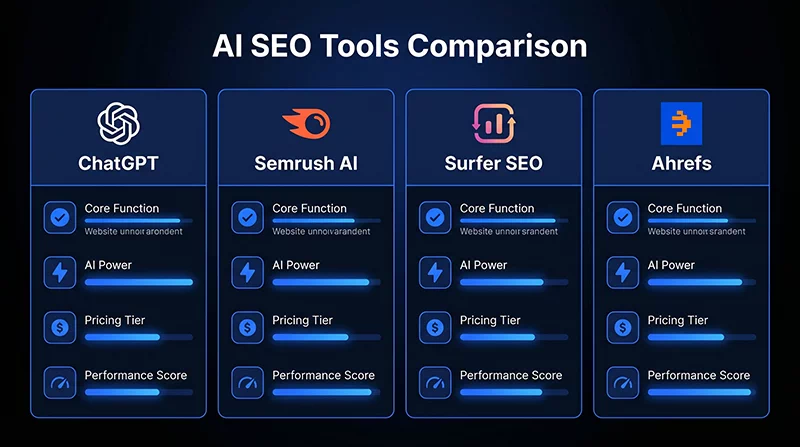
When it comes to the best AI tools for SEO keyword research, you do not need to use all of them. You need the right combination based on your budget and goals. Here are the tools that actually deliver results:
- ChatGPT (GPT-4o) — Best for training with custom instructions, content writing, Search Console analysis, and meta tag optimization. Free plan available.
- Surfer SEO — Best for real-time content scoring against top-ranking pages. It shows you exactly how many keywords, headings, and words your content needs.
- Semrush with AI Features — Best for deep keyword research, competitor analysis, and site audits with AI-powered suggestions.
- Ahrefs — Best for backlink analysis and finding keyword gaps between you and your competitors.
- Google Gemini — Best for analyzing large data files like Search Console exports and getting structured SEO action plans quickly.
- Claude by Anthropic — Best for long-form content analysis, detailed content audits, and nuanced SEO strategy conversations.
You do not need to spend money on all of these. A combination of ChatGPT (free or Plus) and one paid tool like Surfer SEO or Semrush is more than enough to replace what an agency does for you.
Final Thoughts: You Do Not Need an Agency Anymore
The truth is, SEO is no longer a mystery that only experts can solve. With the AI SEO hacks covered in this guide, you now have a complete system — from training your AI correctly, to analyzing real Google data, to fixing your website content, to following a structured monthly plan. The only thing standing between your website and Page 1 of Google is consistent execution.
Start with just one step today. Download your Search Console data, open ChatGPT, and paste in the instructions from Step 2. What the AI tells you in the next five minutes will likely reveal problems your current SEO agency has never even mentioned. And that is when you will realize just how much power you already have in your hands.
Your website deserves better rankings. And now you have exactly what you need to make that happen — without paying anyone a single dollar more than necessary.
Frequently Asked Questions
What are AI SEO hacks?
AI SEO hacks are smart techniques that use artificial intelligence tools — like ChatGPT, Google Gemini, or Claude — to handle SEO tasks faster and more accurately than traditional methods. These tasks include keyword research, content auditing, meta title optimization, Google Search Console data analysis, and competitor comparison. AI SEO hacks help website owners rank on Google without paying for expensive SEO agencies by putting the analysis power directly in the hands of the website owner.
Can I do SEO without hiring an agency?
Yes, absolutely. Using free AI tools like ChatGPT combined with your free Google Search Console data, you can analyze your website’s keyword performance, discover quick-win ranking opportunities, fix meta titles and descriptions, audit your content against top-ranking competitors, and build a full 30-day SEO action plan. The key is knowing how to train the AI correctly and how to feed it the right data — which is exactly what this guide covers step by step.
What are the best AI tools for SEO keyword research?
The best AI tools for SEO keyword research are: ChatGPT (GPT-4o) for content strategy and meta tag optimization, Surfer SEO for real-time content scoring against top-ranking pages, Semrush AI for deep keyword research and competitor gap analysis, Ahrefs for backlink and keyword opportunity discovery, Google Gemini for analyzing large Search Console data exports, and Claude by Anthropic for detailed long-form content audits and nuanced SEO strategy planning. You do not need all of them — ChatGPT combined with one paid tool like Surfer SEO or Semrush is enough to replace most of what an agency does.
Can AI fix meta titles and descriptions to improve Google rankings?
Yes. The smart built system of an AI can analyze your Google Search Console data to find pages with high impressions but low click-through rates — which almost always means the meta title or description is the problem. AI finds the exact problem: missing primary keywords, titles that are too long or too short, descriptions with no clear call-to-action or a mismatch between the title and the actual search intent. It then rewrites these elements to be more compelling, keyword-rich, and perfectly aligned with what users are searching for on the internet.
What is the best free AI tool for SEO in 2026?
Honestly, if you are just getting started, the free version of ChatGPT is more than enough. I use it myself and the results still surprise me every time. But here is the one thing most people get wrong — they open ChatGPT and directly ask it to “write me an SEO blog.” That is why the output feels generic and robotic. Before you ask anything, tell it your niche, your target keywords, and who your audience is. Once ChatGPT understands the full picture, it stops acting like a writing tool and starts behaving like an actual SEO strategist. And if you are dealing with large data files like a Google Search Console export, Google Gemini handles that a little more comfortably. Both are free, both work well — you just need to use them the right way.
How do I use Google Search Console data with AI for SEO?
It is actually much simpler than it sounds. Open your Google Search Console, go to the Performance section, select the last 28 days, and download the data as a CSV file. That is it. Now take that CSV file and upload it into ChatGPT or Gemini. Then ask it directly — “Here is my website data. Show me which keywords are sitting between position 8 and 20, find pages where impressions are high but clicks are low, and tell me which meta titles need fixing.” The AI will go through everything and hand you a proper action plan. I still remember the first time I did this — the analysis that would take an agency an entire week was sitting in front of me in under five minutes.
How long does it take to see results with AI SEO hacks?
There is no single fixed answer here, but let me give you the honest picture from real experience. Pages that are already sitting somewhere between position 8 and 20 — meaning they are close but not quite on Page 1 — those pages respond the fastest. A small fix to the meta title or adding a missing section to the content can move them up within two to three weeks. Google tends to recrawl updated pages pretty quickly. For brand new blog posts, you need a bit more patience — usually somewhere between six and twelve weeks depending on how competitive your keyword is and how established your website is. But here is what I can say with confidence — if you repeat this process consistently every 28 days, the results will come. It is not a one-time trick, it is a system.
How do I train AI to give better SEO results?
Think of AI like a new team member on their first day. If you throw them into work without any briefing, they will guess what you want and deliver average results. The same thing happens with AI. So every time I sit down to do SEO work with AI, I start by giving it context — what my website is about, who I am writing for, which keyword I am targeting, what tone I want, and I even share competitor URLs for reference. That one extra step completely changes the quality of what comes back. Instead of getting a generic blog post that could belong to any website, you get a focused strategy built specifically for your audience and your keyword. It takes two extra minutes to brief the AI properly and it saves hours of editing later.