
The web development landscape has shifted dramatically. If you are still building websites the same way you did in 2023, you are already falling behind.
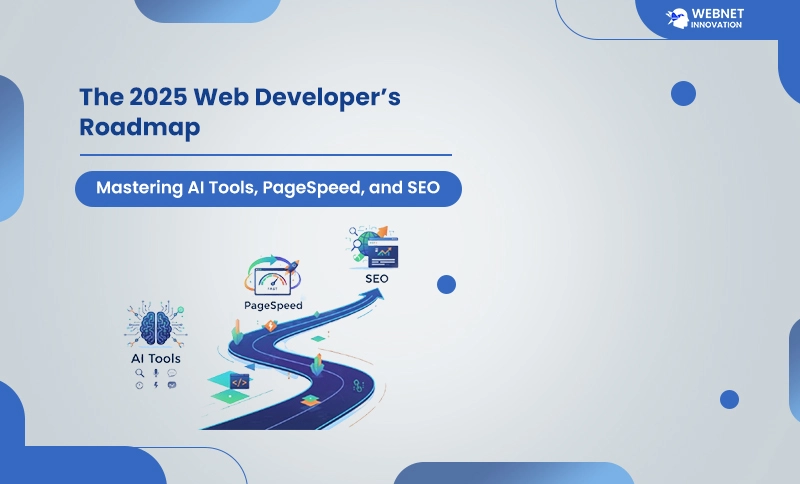
As we move deeper into 2025, the gap between a “good” website and a “great” website isn’t just about design it’s about intelligent performance. From the rise of on-device AI models like Gemini Nanoa and ChatGPT to the evergreen battle against render-blocking resources, success this year requires a hybrid approach: embracing new AI tools while mastering the foundational code.
At Webnet Innovation, we help businesses navigate this complex landscape. Today, we’re breaking down the three critical pillars of web development for 2025.
1.The AI Revolution: It’s More Than Just Chatbots
In 2024, AI was a buzzword. In 2025, it is a utility. The most exciting development for web creators right now is the emergence of efficient, high-quality image and code generation models.
Gemini Nano & The “Nano Banana” Model
Your search history might be full of queries about Google’s Gemini Nano (internally codenamed “Nano Banana”). Why the sudden interest? Because it represents a massive leap in local AI processing.
For web developers, this means we can now integrate features like smart image recognition, text summarization, and even basic code generation directly into web apps without sending data to a heavy, expensive server.
Free AI Web Design Tools
If you are bootstrapping a project, 2025 offers an incredible suite of free tools to speed up your workflow:
- Code Generation: AI coding assistants are now standard for generating boilerplate HTML and CSS.
- Image Assets: Models like Gemini 2.5 Flash Image allow developers to generate placeholder assets or unique background textures in seconds.
Pro Tip: AI is a tool, not a replacement. While AI can write code, it often produces bloated output. You still need a professional touch to ensure that code is clean, secure, and semantic.
2. PageSpeed is Non-Negotiable (Core Web Vitals)
While AI is the shiny new toy, speed remains the king of SEO. Google’s Core Web Vitals are stricter than ever. If your site takes more than 2.5 seconds to load, you are losing traffic—period.
The Silent Killer: Render-Blocking Resources
The most common warning we see in PageSpeed Insights is: “Eliminate render-blocking resources.”
This happens when files (like heavy CSS or JavaScript) force the browser to “pause” building your website to download a script. The result? A blank white screen that frustrates users.
Many developers try to patch this with heavy plugins, but that often causes more problems than it solves. The best approach is often a manual cleanup:
- Deferring non-critical JavaScript.
- Inlining critical CSS.
- Removing unused code.
Deep Dive: We wrote a complete guide on how to fix this without bloating your site with extra tools.
Read Now: How to Eliminate Render-Blocking Resources in WordPress (Without Plugin)
3. Back to Basics: The Power of Clean HTML5
In the rush to use complex frameworks like React or Vue, many developers forget the power of simple, semantic HTML.
Believe it or not, search engines love simple HTML. Properly structured code helps AI crawlers understand exactly what your content is about.
Mastering the Fundamentals
We see thousands of searches every month from people asking simple questions like “how to insert an image in HTML” or “how to create a link for an image.”
This isn’t just “beginner stuff”—it’s the foundation of accessibility.
- Are you using the correct alt tags?
- Are you wrapping your images in <a> tags correctly for navigation?
- Are you using srcset to serve responsive images for mobile devices?
If you are just starting your journey or need a refresher on the syntax that powers the web, check out our beginner-friendly tutorial.
Learn More: How to Insert an Image in HTML (And Make It Clickable)
4. Why You Need a Professional Development Partner
With all these free AI tools and tutorials, you might be tempted to DIY your business website.
But here is the reality: AI tools lack context.
- They don’t know your specific business goals.
- They can’t optimize your server configuration for maximum speed.
- They often produce generic designs that look like everyone else’s.
At Webnet Innovation, we combine the latest tech trends (like AI integration) with rock-solid engineering principles. We don’t just build websites; we build digital assets that rank high on Google and convert visitors into customers.
Looking for an affordable website development company that understands 2025’s tech landscape? Contact us today for a free consultation.
Conclusion
2025 is the year of the “Smart Website.” It’s about leveraging Gemini Nano for features, eliminating render-blocking resources for speed, and writing clean HTML for structure.
Stay ahead of the curve. Keep reading our blog for the latest updates on programming trends, or reach out to us to handle the heavy lifting for you.