
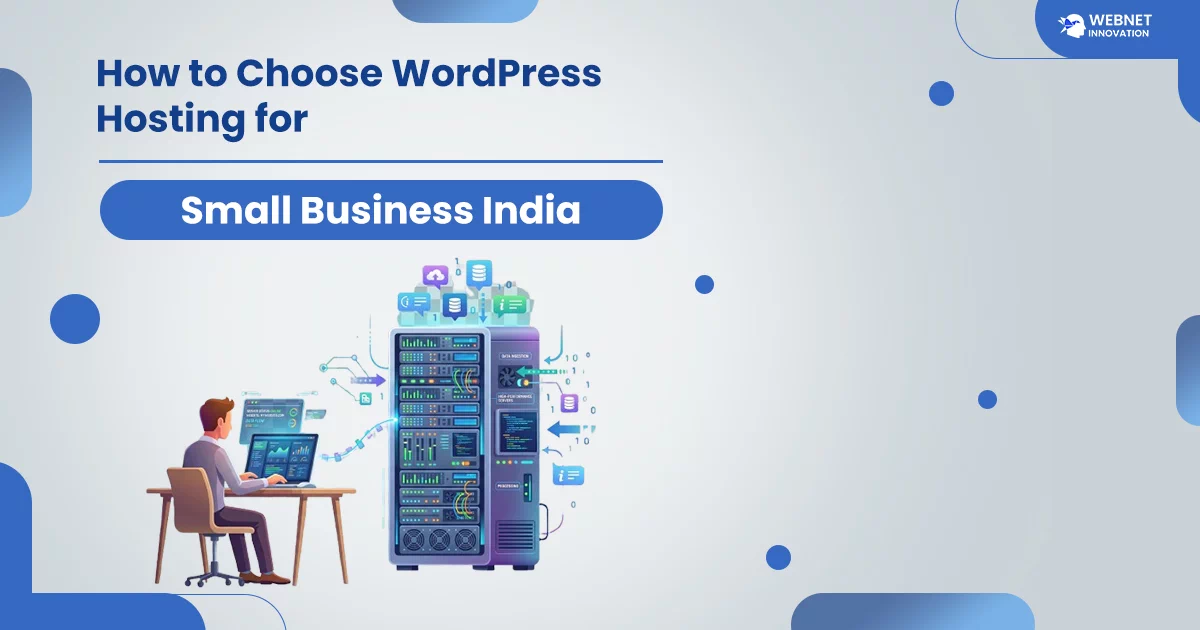
For most small businesses in India, managed WordPress hosting with an Indian or nearby data center, NVMe storage, and daily backups offers the best balance of speed and reliability, typically costing between ₹150 and ₹600 per month on longer billing cycles. Basic shared hosting works for very simple sites with low traffic, but anything relying on the website for leads or sales benefits from the extra performance and support managed hosting provides.
Table of Contents
Almost every client conversation I have eventually reaches the same question: “which hosting should I buy?” And almost every time, the honest answer is that it matters less than the marketing around it suggests — but it does matter, and getting it wrong quietly costs you speed, uptime, and sometimes security.
I want to walk through this the way I actually explain it to clients, without pushing a specific company. A lot of what you’ll find searching this topic is written by the hosting companies themselves or by affiliates earning a commission on whichever provider they recommend. That doesn’t make their advice wrong, but it does mean the “best” pick in most of these guides tends to conveniently be whoever is paying the highest commission that month.
Types of WordPress Hosting Explained
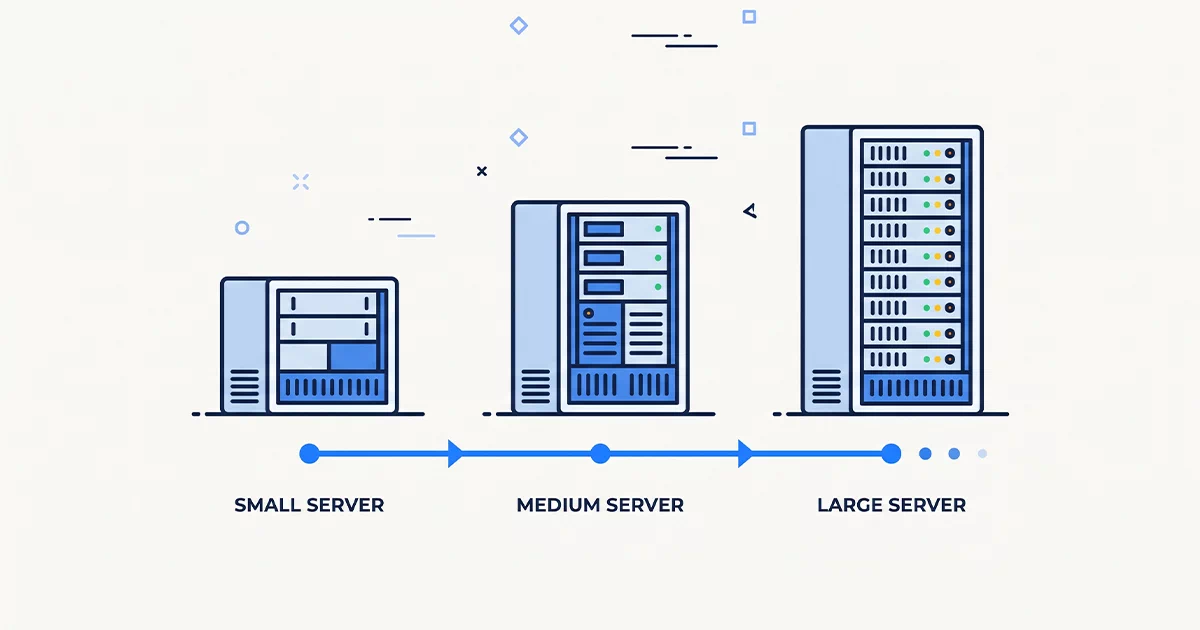
Before comparing prices, it helps to understand what you’re actually choosing between, because these three categories behave very differently under real traffic.
Shared hosting puts your website on the same physical server as hundreds, sometimes thousands, of other websites, all splitting the same limited resources. It’s the cheapest option, often available for well under ₹200 a month, and it’s genuinely fine for a simple brochure-style website with low traffic. The tradeoff shows up when traffic spikes or another site on the same server has a problem — your performance can suffer for reasons that have nothing to do with your own website.
Managed WordPress hosting is built specifically around WordPress rather than generic website hosting. It typically includes automatic updates, built-in caching tuned for WordPress, daily backups, and support staff who actually understand WordPress-specific issues rather than generic server questions. This is where most small businesses in India land once their website starts actually mattering for the business — usually somewhere between ₹150 and ₹600 per month depending on the provider and plan.
VPS or cloud hosting gives you a dedicated slice of server resources that isn’t shared unpredictably with other sites. It costs more and requires more technical comfort to manage well, which makes it better suited to WooCommerce stores handling real order volume or sites with consistently high traffic rather than a typical small business brochure site.
What Actually Matters When Choosing Hosting?
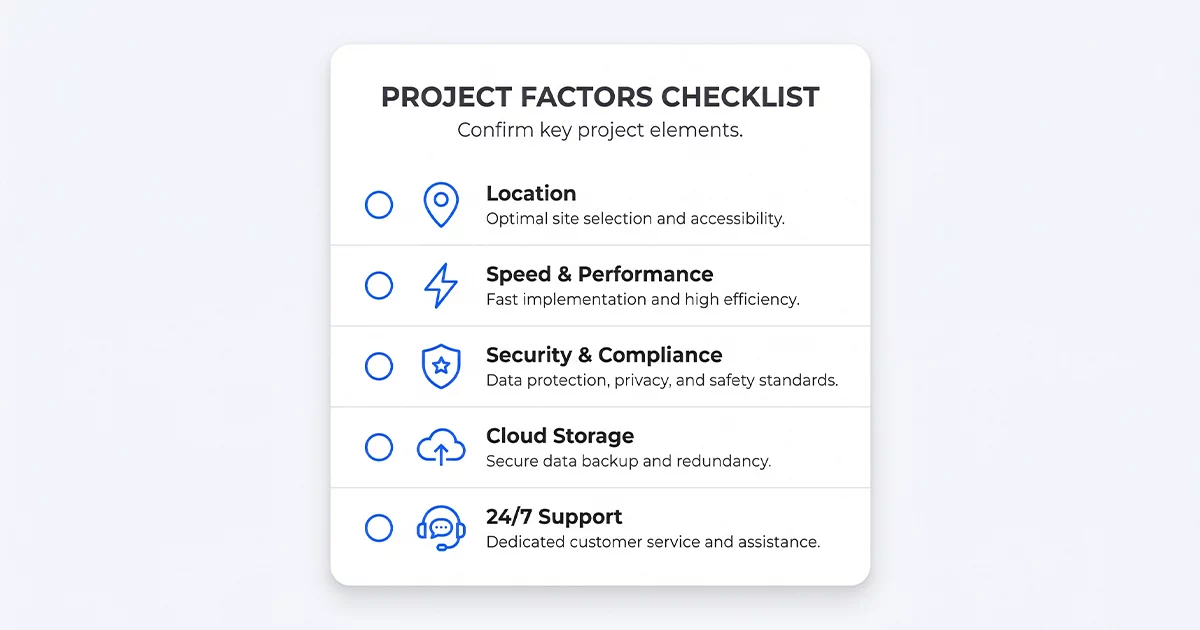
Strip away the marketing language most hosting comparison pages use, and what genuinely affects your website’s performance comes down to a handful of concrete things.
Server location relative to your audience matters more than most people realize. If your customers are primarily in India, hosting on a server physically located in India or a nearby region reduces the time it takes for your site to start loading — this is a real, measurable factor in page speed, not a minor technical detail.
Storage type is worth checking specifically. NVMe storage is noticeably faster than older SATA SSD storage, and the difference becomes obvious during traffic spikes or when WordPress is doing heavier database queries — something that happens constantly on WooCommerce stores and busy blogs.
Backup frequency and where those backups are stored matters more than people think about until they need one. Daily automated backups, stored somewhere separate from the main server, are the difference between a bad afternoon and a genuine crisis if something ever goes wrong — this connects directly to what I’ve written about signs your WordPress website has been hacked and how much faster recovery is with a clean, recent backup available.
Support quality is genuinely hard to evaluate before you need it, but a reasonable proxy is checking whether support is available through channels you’d actually use — live chat or a direct number, not just a ticket system with a multi-day response time — and whether the provider clearly understands WordPress specifically rather than just generic hosting.
Shared Hosting vs Managed WordPress Hosting — Which One Do You Need
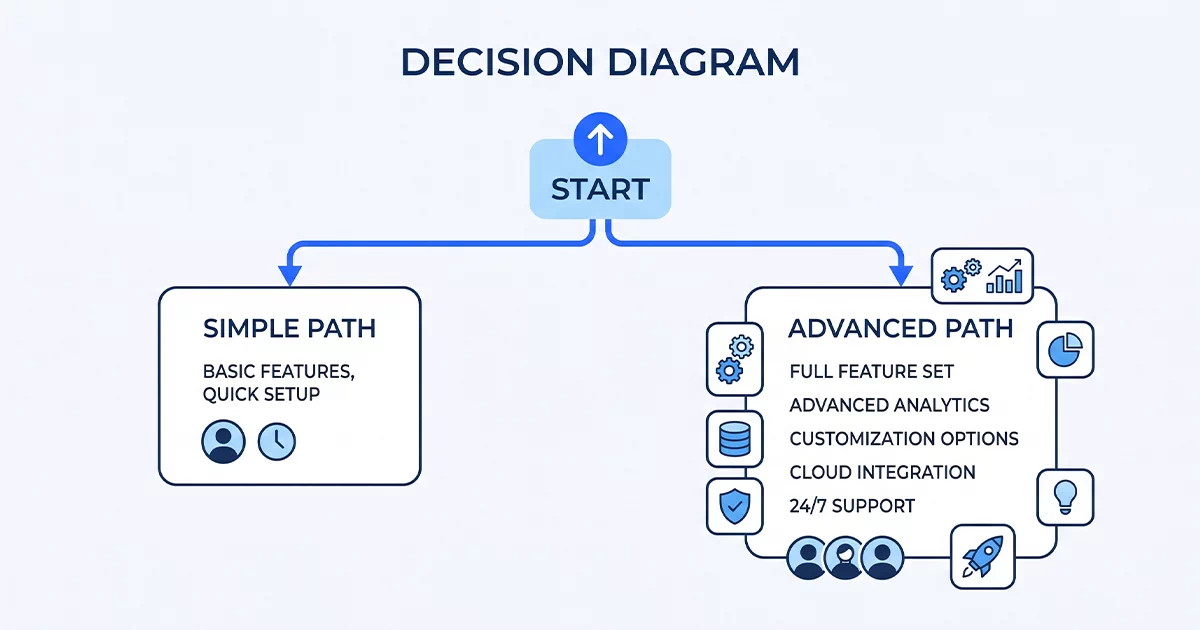
This is the decision most small business owners actually need help with, and the honest answer depends entirely on what the website is for.
If your website is essentially a digital business card — a handful of pages, low traffic, no ecommerce, updated rarely — shared hosting is a perfectly reasonable choice, and spending more for managed hosting wouldn’t meaningfully change the visitor experience.
If the website is actively generating leads, running an online store, or gets meaningful daily traffic, managed WordPress hosting earns its higher price fairly quickly. The performance difference shows up directly in page speed, and page speed connects directly to both conversion rates and Google rankings — something I go into in more depth when explaining why your WordPress website is slow in the first place. A website that’s slow because of underpowered shared hosting isn’t a content problem or a design problem — it’s an infrastructure problem, and no amount of optimization elsewhere fully compensates for weak hosting underneath it.
How Much Should WordPress Hosting Cost in India?

Realistic 2026 pricing for Indian small businesses generally falls into a few bands. Basic shared hosting typically runs ₹50 to ₹150 per month, usually cheaper on longer billing commitments. Managed WordPress hosting suited to an active small business site generally falls between ₹150 and ₹600 per month depending on the provider and included features. VPS or cloud hosting for higher-traffic sites or WooCommerce stores with real order volume typically starts around ₹500 to ₹800 per month and scales upward from there based on resources needed.
One thing worth watching closely: the price you see advertised is almost always an introductory rate for the first term, often billed for one to three years upfront. The renewal price — what you actually pay from year two onward — is frequently two to four times higher than that initial promotional rate. Always check the renewal pricing before committing, not just the number on the pricing page.
Final Thoughts — Hosting Is Infrastructure, Not a Feature
Hosting is one of those decisions that’s invisible when it’s working well and impossible to ignore when it isn’t. It doesn’t need to be the most expensive line item in your website budget, but it does need to actually match what your website is being asked to do.
I generally recommend clients start with solid managed WordPress hosting if the website is meant to generate real business — leads, sales, bookings — rather than defaulting to the cheapest available option and hoping it holds up. The difference in monthly cost is usually small. The difference in reliability, speed, and how well your site handles best WordPress plugins to protect your website.
If you’re setting up a new website and want hosting, design, and technical setup handled together rather than pieced together separately, this is exactly the kind of foundational decision I help clients with as part of the affordable web design services I offer — getting hosting right from day one avoids a painful, costly migration later once the business has outgrown whatever was picked without much thought at the start.
Frequently Asked Questions — WordPress Hosting in India
Does hosting really affect my Google ranking?
Indirectly, yes, and the connection is stronger than most people expect. Page speed is a confirmed ranking factor, and hosting quality is one of the biggest levers affecting how fast your website loads. Slow, overcrowded shared hosting can hold back an otherwise well-built, well-optimized website. Good hosting alone won’t fix poor on-page SEO, but weak hosting can undo the benefit of everything else you do correctly.
Can I switch hosting providers later without losing my website?
Yes, migrating WordPress hosting is a standard, well-understood process, though it involves some technical steps — moving files, exporting and importing the database, and updating DNS settings. It does carry some risk if done carelessly, particularly around downtime during the transition, so either following a careful checklist or having someone experienced handle the migration is worth it, especially for a business site where downtime has a real cost.
Is the cheapest hosting plan always a bad idea?
Not always, but it depends entirely on what the website needs to do. For a very simple, low-traffic site, a cheap shared plan can work fine for years. The risk with ultra-cheap hosting specifically is usually resource limits that get hit unexpectedly during a traffic spike, or renewal pricing that jumps sharply after the first term — both are worth checking before assuming “cheapest” and “adequate” are the same thing for your specific situation.
Should I trust hosting recommendations I find online?
Read them with the understanding that most hosting comparison content includes affiliate links, which creates a financial incentive to recommend certain providers regardless of genuine fit. That doesn’t make every recommendation wrong, but it’s worth focusing on the underlying criteria — server location, storage type, backup policy, actual support responsiveness — rather than taking any single “best hosting” list at face value.